Cognitive Therapy with a Focus: Healing Trauma
When traumatic life events impact your child, teenager, or family, finding the right therapeutic interventions can feel overwhelming. At Light Within Counseling in Roseville, California, our group practice specializes in trauma-focused cognitive therapy through Trauma-Focused Cognitive Behavioral Therapy (TF-CBT), an evidence-based treatment that has helped countless families move from surviving to thriving. Our team of skilled mental health professionals combines advanced training with genuine compassion to create personalized healing experiences for each family we serve.
Understanding Trauma-Focused Cognitive Behavioral Therapy
Trauma-Focused Cognitive Behavioral Therapy (TF-CBT) represents one of the most thoroughly researched psychological therapies for children and adolescents who have experienced traumatic events. This specialized form of cognitive behavioral therapy was developed in the 1990s by leading trauma specialists and has been validated through systematic reviews and more than 25 randomized controlled trials, consistently demonstrating significant reductions in PTSD symptoms, post traumatic stress symptoms, anxiety, depression, and behavior problems.
What makes trauma focused CBT particularly powerful is its comprehensive approach to treating trauma. Rather than focusing solely on the child or adolescent, this therapy model recognizes that traumatic experiences affect entire family systems. At our Roseville practice, we’ve witnessed how this family-centered approach with extensive caregiver involvement accelerates healing and creates lasting positive changes that extend far beyond the therapy room.
TF-CBT specifically addresses the unique ways trauma impacts developing minds. When children and teenagers experience traumatic life events such as physical abuse, sexual abuse, domestic violence, or other forms of child maltreatment, their developing brains and coping systems can become overwhelmed. This leads to trauma related symptoms that interfere with daily functioning, relationships, and overall mental health. Our therapists understand these developmental considerations and tailor each CBT treatment plan to meet the specific needs of your child’s age, personality, and circumstances.
The Science Behind TF-CBT: How Trauma Affects the Brain
Understanding how traumatic experiences impact the brain helps explain why trauma focused cognitive behavioral therapy is so effective for treating children and adolescents exposed to various traumatic events. When a traumatic event occurs, the brain’s alarm system can become hypersensitive, causing children and teens to react to ordinary situations as if they’re dangerous. This survival response, while protective during actual danger, can become problematic when it activates inappropriately in safe environments, leading to posttraumatic stress disorder symptoms.
Trauma focused CBT works by helping young people understand these brain responses and develop new neural pathways that support healing. Through a combination of psychoeducation, coping skills development, cognitive processing, and carefully guided processing of the trauma narrative, we help children and families rewire these fear responses and rebuild a sense of safety and control. This approach is particularly effective for traumatized children who may struggle with trauma reminders and associated feelings.
Our Roseville-based team takes time to explain these concepts in age-appropriate ways, ensuring that both children and their primary caregivers understand what’s happening and feel empowered throughout the healing process. We believe that knowledge builds confidence, and confidence supports recovery from traumatic stress.

The PRACTICE Model: A Roadmap to Recovery
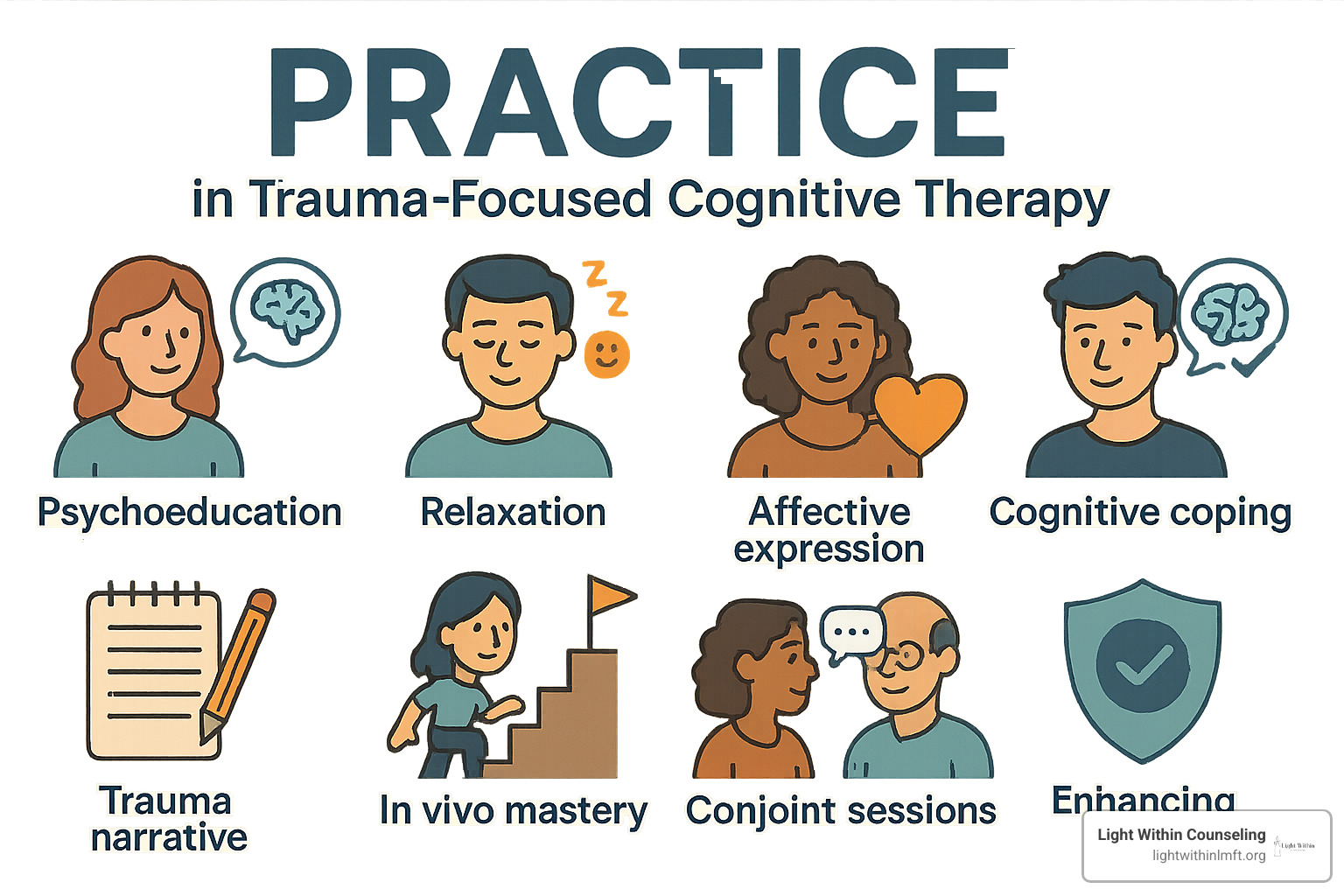
Trauma focused cognitive behavioral therapy follows a structured yet flexible framework known as the PRACTICE model. Each letter represents a crucial component of treatment that our therapists carefully adapt to your family’s unique situation:
Psychoeducation and Parenting Skills: We begin by helping families understand trauma and its effects on mental health. This isn’t just about providing information—it’s about normalizing reactions to traumatic life events and building hope. Our therapists work with caregivers to develop trauma-informed parenting skills that support healing at home and address any behavior problems that may have emerged.
Relaxation and Coping Skills: Children and teens learn practical relaxation skills for managing overwhelming emotions and physical sensations. These might include deep breathing exercises, progressive muscle relaxation, or mindfulness techniques tailored to your child’s age and preferences. These coping skills become essential tools for managing trauma related distress.
Affective Expression and Regulation: We help young people identify, express, and manage their emotions in healthy ways. This component often involves creative therapeutic interventions like art, play, or writing, depending on what resonates with your child and helps them process associated feelings.
Cognitive Coping: This phase focuses on identifying and challenging unhelpful thought patterns that may have developed after traumatic experiences. We help children and teens recognize the connection between thoughts, feelings, and behaviors, empowering them to make positive changes and address issues like self blame.
Trauma Narrative and Processing: Perhaps the most crucial component, this involves gradually and safely processing the traumatic experience. Our therapists guide children through creating their trauma narrative at a pace that feels manageable, helping to reduce the emotional intensity of traumatic memories through cognitive processing techniques.
In-Vivo Gradual Exposure: When trauma has led to avoidance of certain places, people, or activities, we work together through gradual exposure to safely re-engage with these areas of life. This process is always collaborative and moves at your child’s pace.
Conjoint Parent-Child Sessions: These powerful conjoint sessions bring families together to practice new skills, improve communication, and strengthen relationships that may have been strained by trauma.
Enhancing Safety and Future Growth: We conclude by developing comprehensive safety plans and focusing on building resilience for the future, reducing symptoms while promoting long-term recovery.
Personalized Treatment Across Different Ages
One of the strengths of our approach at Light Within Counseling is our ability to adapt trauma focused cognitive behavioral therapy for different developmental stages. We understand that a 6-year-old processes traumatic experiences very differently than a 16-year-old, and our treatment approach reflects these important differences when treating children and adolescents.
Early Childhood (Ages 6-8): For our youngest clients, trauma therapy often looks like play. We use toys, games, art, and storytelling to help children process their experiences. Simple relaxation skills like “bubble breathing” or “teddy bear breathing” help little ones learn to calm their bodies and manage PTSD symptoms. Caregiver involvement is extensive during this stage, as primary caregivers learn new ways to support their child’s emotional regulation and address any behavior problems.
Middle Childhood (Ages 9-12): Children in this age group can engage in more direct conversation about their traumatic experiences while still benefiting from creative therapeutic interventions. We might use art therapy techniques, creative writing, or age-appropriate books to explore feelings and develop coping skills. These children are developing their sense of right and wrong, so addressing any shame or self blame becomes particularly important in cognitive behavioral therapy.
Adolescence (Ages 13-18): Teenagers can engage with the full range of cognitive coping techniques while also addressing identity, peer relationships, and increasing independence. We recognize that adolescents who have experienced trauma often struggle with feeling different from their peers, so building confidence and addressing isolation becomes crucial. Our younger team of therapists, mostly in their 30s, often connect well with teens who appreciate their relatable, down-to-earth approach to trauma therapy.
Caregiver Support: Throughout TF CBT treatment, we provide parallel sessions for caregivers to address their own reactions to their child’s trauma, learn new parenting skills, and process any secondary traumatic stress they may have experienced. We understand that traumatic life events affect entire families, and healing works best when everyone receives mental health services.
Who Can Benefit from TF-CBT
Trauma focused CBT has proven effective for children and adolescents who have experienced a wide range of traumatic events. At our practice, we’ve successfully helped families dealing with various types of trauma, always tailoring our approach to each family’s specific circumstances and cultural background when treating trauma.
This cognitive behavioral therapy approach can be beneficial for young people who have experienced physical abuse, sexual abuse, domestic violence exposure, child maltreatment, accidents, medical trauma, natural disasters, community violence, interpersonal violence, or traumatic grief. We also work with families dealing with complex trauma—situations where children have experienced multiple traumatic life events or ongoing traumatic circumstances.
We’re particularly skilled at treating children who have experienced abuse, including sexually abused children and those dealing with sexual behavior problems or sexualized behaviors that may have developed following traumatic experiences. Our trauma focused cognitive behavioral therapy approach addresses these sensitive issues with appropriate clinical expertise and compassion.
The trauma related symptoms that bring families to our office vary widely, but often include nightmares, flashbacks, anxiety, depression, behavioral changes, difficulty concentrating, social withdrawal, or regression in developmental milestones. Some children become hypervigilant and easily startled, while others may seem emotionally numb or disconnected. We understand that posttraumatic stress symptoms can co-occur with other mental illness concerns, including affective disorders or substance abuse issues in older adolescents.
Our team particularly enjoys treating children and preteens, though we serve clients from age 6 through young adulthood. We understand that seeking mental health services for trauma can feel overwhelming, which is why we’ve created an intake process designed to be as supportive and stress-free as possible.
What to Expect During TF-CBT Treatment
Most families complete trauma focused cognitive behavioral therapy in 12-16 weekly sessions, though the exact treatment length depends on various factors including the nature of the traumatic experiences, your child’s individual needs, and how they respond to therapeutic interventions. Some families dealing with single-incident trauma may finish sooner, while those addressing complex trauma or multiple traumatic life events may benefit from additional sessions.
TF CBT treatment typically unfolds in three phases, each building upon the previous stage. The initial phase focuses on stabilization and safety, helping children and families understand trauma and learn basic coping skills and relaxation skills. This foundation is crucial—we never rush into trauma narrative processing until everyone feels ready and equipped with the tools they need to manage trauma related distress.
The middle phase involves carefully processing traumatic memories through the trauma narrative and challenging unhelpful beliefs that may have developed. This cognitive processing work is done gradually and always at your child’s pace, with plenty of support and breaks as needed. We often describe this phase as “shining a light” on difficult memories so they lose their power to cause ongoing PTSD symptoms.
The final phase emphasizes integration and mastery, helping children and families use their new coping skills in daily life and prepare for continued growth after therapy ends. We celebrate progress throughout this journey and help families recognize the strength and resilience they’ve developed through trauma focused CBT.
While TF-CBT can be adapted for group format delivery in some settings, our practice focuses on individualized treatment that allows for the personalized attention each family deserves.

Our Approach: Evidence-Based Care with Heart
At Light Within Counseling, we believe that effective trauma therapy requires both clinical expertise and genuine human connection. Our team has completed extensive training in trauma focused cognitive behavioral therapy, including specialized certification processes that ensure we deliver this treatment with fidelity to the research-based model while adapting it thoughtfully to each family’s needs.
What sets our group practice apart is our commitment to making mental health services feel approachable rather than intimidating. Our team of therapists, mostly in their 30s, brings both advanced training and a fresh perspective that many families find comforting. We pride ourselves on being relatable, compassionate, and skilled, taking time to truly understand each family’s unique situation before crafting a personalized CBT treatment plan.
We also integrate other evidence-based psychological therapies when appropriate, including EMDR and Brainspotting for trauma processing, and play therapy techniques for our younger clients. This flexibility allows us to provide truly individualized trauma therapy while maintaining our commitment to evidence-based practice for treating trauma.
Our Roseville location serves families throughout Northern California, including Lincoln, Rocklin, Auburn, Granite Bay, Loomis, Orangevale, West Roseville, and the greater Sacramento area. For adults seeking trauma therapy, we also offer secure telehealth mental health services throughout California, ensuring that distance doesn’t prevent access to quality care.
Integration with Other Therapeutic Approaches
While trauma focused cognitive behavioral therapy serves as our primary framework for treating childhood trauma, we recognize that some families benefit from integrating additional therapeutic interventions. Our team is trained in various complementary approaches that can enhance the TF-CBT process when clinically appropriate for addressing specific trauma related symptoms.
EMDR (Eye Movement Desensitization and Reprocessing) can be particularly effective for processing traumatic memories and is sometimes integrated into treatment plans for older children and adolescents dealing with posttraumatic stress disorder. Brainspotting, another powerful trauma-processing technique, helps access and heal trauma stored in the deeper regions of the brain and body.
For families dealing with anxiety disorders alongside trauma, we may incorporate ERP (Exposure and Response Prevention) techniques to address specific phobias or compulsive behaviors that developed after traumatic experiences. When trauma has affected family relationships, we often include elements of family therapy and enhanced parenting skills support.
This integrative approach ensures that each family receives exactly what they need for healing, rather than a one-size-fits-all treatment plan. Our intake process includes careful assessment to determine which combination of approaches will be most beneficial for your specific situation when treating trauma.
Supporting Families Through the Healing Journey
We understand that beginning trauma therapy can feel like a big step, especially when traumatic experiences have affected trust and safety. Our intake process is designed to be as smooth and supportive as possible. You can choose to self-schedule directly with one of our therapists through our online system, or reach out by phone, email, or text to have our coordinator help match you with a therapist who fits your family’s specific needs for trauma focused cognitive behavioral therapy.
Before your first session, you’ll complete some straightforward online paperwork that helps us understand your situation and prepare for our time together. This intake session focuses on building connection, hearing your story, and understanding what brought you to seek mental health services. We work collaboratively to identify goals for therapy and begin to understand the root issues you’re facing related to your traumatic experiences.
Throughout treatment, we maintain regular communication about progress, celebrate growth and milestones, and adjust treatment goals as needed. We believe in transparency about the therapeutic process and ensure that both children and caregivers understand what’s happening and why during cognitive behavioral therapy.
Building Resilience for the Future
While trauma focused CBT focuses on healing from past traumatic life events, it also builds coping skills and resilience that serve children and families long after therapy ends. The cognitive coping strategies, communication skills, and self-awareness developed during treatment become tools that families can use to navigate future challenges with greater confidence and stability, effectively reducing symptoms long-term.
We’ve seen families emerge from TF-CBT treatment not just free from trauma related symptoms, but actually stronger and more connected than before. Children develop a sense of mastery over their traumatic experiences, caregivers feel more confident in their parenting skills, and families often report feeling closer and more resilient as a unit after completing trauma focused cognitive behavioral therapy.
Through developing strategies for managing trauma reminders and building robust coping skills, families are better equipped to handle life’s inevitable challenges. The trauma narrative work helps children integrate their experiences in a way that reduces their emotional impact, while the cognitive processing techniques provide lasting tools for maintaining mental health.
Taking the First Step
If traumatic life events have impacted your child or family, please know that healing is possible. Trauma focused cognitive behavioral therapy offers a research-backed path forward that honors both your child’s resilience and the importance of family support in the healing process. At Light Within Counseling, we’re committed to walking alongside you on this journey with expertise, compassion, and hope.
Our team is here to answer your questions about trauma focused CBT, help you understand whether this approach might be right for your family, and guide you through the process of getting started with mental health services. You can reach out anytime by phone, text, email, or through our website to schedule a consultation or learn more about our trauma therapy services.
Remember, seeking help for trauma is a sign of strength, not weakness. Your willingness to pursue healing for your child and family demonstrates the love and commitment that will fuel the recovery process. We’re honored to be part of that journey and look forward to helping you rediscover the light within your family’s story through effective trauma focused cognitive behavioral therapy.
For more information about scheduling, our intake process, or to connect with our team, please contact Light Within Counseling. We’re here to support you every step of the way toward healing and hope.