Grief Counseling Roseville: 1 Simple Healing Guide
Grief counseling in Roseville provides professional mental health services for individuals, children, teens, and families navigating loss in the greater Sacramento area. At Light Within Counseling, our group practice offers comprehensive grief counseling through evidence-based therapeutic approaches tailored to each person’s unique needs and life circumstances.
Our Grief Counseling Services Include:
- Individual therapy sessions with licensed therapists
- Family counseling for processing loss together
- Specialized child and teen therapy, including play therapy
- Support for all ages with developmentally appropriate approaches
- Online sessions available for adults and young adults throughout California
- Evidence-based treatments including EMDR, Brainspotting, ERP, and trauma therapy
- Flexible scheduling with both in-person and virtual therapy sessions
Our mental health services address the full range of grief experiences, including loss from death, divorce, major life transitions, and other significant changes that impact daily functioning and emotional well-being. We also provide substance abuse and addiction therapy for those whose grief has led to unhealthy coping mechanisms.
Understanding Grief: More Than Just Sadness
Loss touches every person at some point in their life journey. Whether you’ve experienced the death of a loved one, gone through a divorce, faced a major life transition, or are supporting someone through grief, the pain can feel overwhelming. Grief researchers have discovered that significant loss activates the same brain regions responsible for physical pain. That crushing weight in your chest and profound exhaustion aren’t signs of weakness—they represent your brain and body’s normal response to loss.
Grief encompasses a complex mix of emotions, physical symptoms, and behavioral changes. You might feel angry, numb, sad, or confused, sometimes experiencing multiple feelings simultaneously. There’s no “right” way to grieve and no predetermined timeline for healing. What matters most is understanding that you don’t have to navigate this journey alone.
At Light Within Counseling, our team of skilled therapists has dedicated years to helping individuals, teens, and families in Roseville work through grief and trauma using evidence-based approaches. We believe deeply in the importance of the therapeutic relationship and take a personalized approach with every client, focusing on their specific needs and goals. Through our grief counseling services, we provide the compassionate, individualized support you need during this difficult time, helping you develop resilience and find hope again.
The grief process brings a whirlwind of emotions that can disrupt your sense of normalcy and challenge your ability to cope with daily life. People coping with loss often find themselves struggling to maintain their usual routines and relationships. This is where professional grief counseling becomes invaluable, providing a supportive environment where you can process these intense emotions at your own pace.
Common Grief Reactions
Grief manifests differently for everyone, but certain responses are common. Understanding these reactions can help normalize your experience and reduce feelings of isolation as you navigate this challenging period in your life.
Emotional Responses: You might experience anger, guilt, numbness, despair, anxiety, or relief. These feelings often cycle unpredictably, which is a normal part of the non-linear grieving process. Some people feel guilty about experiencing moments of happiness or normalcy. Past experiences with loss can influence how you process current grief, making each person’s journey unique.
Physical Responses: Many people notice tightness in their throat or chest, an empty feeling in their stomach, and profound fatigue. Changes in appetite, sleep disturbances, headaches, and general aches and pains are frequently reported. Your body is processing stress and emotional pain, which can manifest in numerous physical ways.
Behavioral Responses: You might withdraw from social activities, feel restless, experience unexpected crying spells, or have difficulty concentrating. Some individuals find themselves adopting mannerisms or habits of the person they lost, while others avoid reminders entirely. These behavioral changes represent your mind’s attempt to cope with significant loss.
When Grief Becomes Complicated
While grief naturally softens over time for most people, sometimes the process becomes “stuck,” significantly interfering with daily functioning for extended periods. This experience, known as complicated grief, differs from typical depression because it centers specifically around the loss. In some cases, this develops into Prolonged Grief Disorder, where debilitating pain persists for many months, making it difficult to achieve acceptance and move forward in life.
Signs that professional grief counseling could be beneficial include:
- Inability to function in daily activities such as work or self-care
- Intense, persistent emotional pain that doesn’t lessen over many months
- Feeling completely stuck and unable to envision a future
- Extreme preoccupation with or complete avoidance of loss reminders
- Reliance on unhealthy coping mechanisms, including substance use
- Thoughts of self-harm or feeling unable to overcome the pain
If you recognize these signs, our grief counseling services can provide crucial support. Our therapists help clients work through the obstacles of complicated grief, supporting them as they strive to overcome these challenges and rediscover hope. We believe anyone struggling to process loss can benefit from professional counseling, particularly when trauma is involved. Through therapy sessions, clients can develop healthy coping strategies and build resilience for their healing journey.
Specialized Support for Different Types of Loss
Different losses present unique challenges, and our team at Light Within Counseling provides customized support for various grief experiences that affect people throughout their life journey.
Loss of Family Members: The death of a spouse, child, parent, or sibling creates profound devastation. Our therapists understand the specific challenges each type of family loss presents and provide targeted support for processing these relationships. Losing a loved one often triggers anxiety about other relationships and life’s unpredictability.
Traumatic Loss: Deaths from suicide, accidents, violence, or sudden illness can shatter your sense of safety and predictability. Our expertise in trauma therapies like EMDR and Brainspotting proves especially valuable for processing these experiences. People coping with traumatic loss often struggle with anxiety and need specialized support to achieve healing.
Pet Loss: The death of a beloved pet represents real and profound grief. We validate the deep emotional connection people have with their animals and provide support for processing this often under-recognized loss that can significantly impact daily functioning.
Perinatal Loss: The loss of a baby during pregnancy or shortly after birth creates unique grief that affects parents, families, and their sense of future parenthood. Our therapists provide specialized support for this profound loss that often includes complicated emotions and relationship challenges.
Anticipatory Grief: Sometimes grief begins before an actual loss occurs, such as when a loved one receives a terminal diagnosis. This anticipatory grief creates its own unique emotional challenges as people cope with ongoing stress and the impending death of their loved one.
Disenfranchised Grief: Some losses aren’t openly acknowledged by society, such as the end of a significant relationship, job loss, or fertility struggles. We provide validation and support for all types of meaningful losses that impact your life and emotional well-being.
We offer specialized support for adults, teens, young adults, and children, understanding that each age group faces distinct challenges. Adults often struggle with balancing responsibilities while grieving, teens and young adults may grapple with identity and peer relationships, and children frequently have difficulty expressing their complex emotions. Our associates are particularly skilled in working with children as young as 6, using play therapy and other developmentally appropriate approaches to help them process their feelings and develop resilience.
Our Approach to Grief Counseling
Individual Grief Counseling
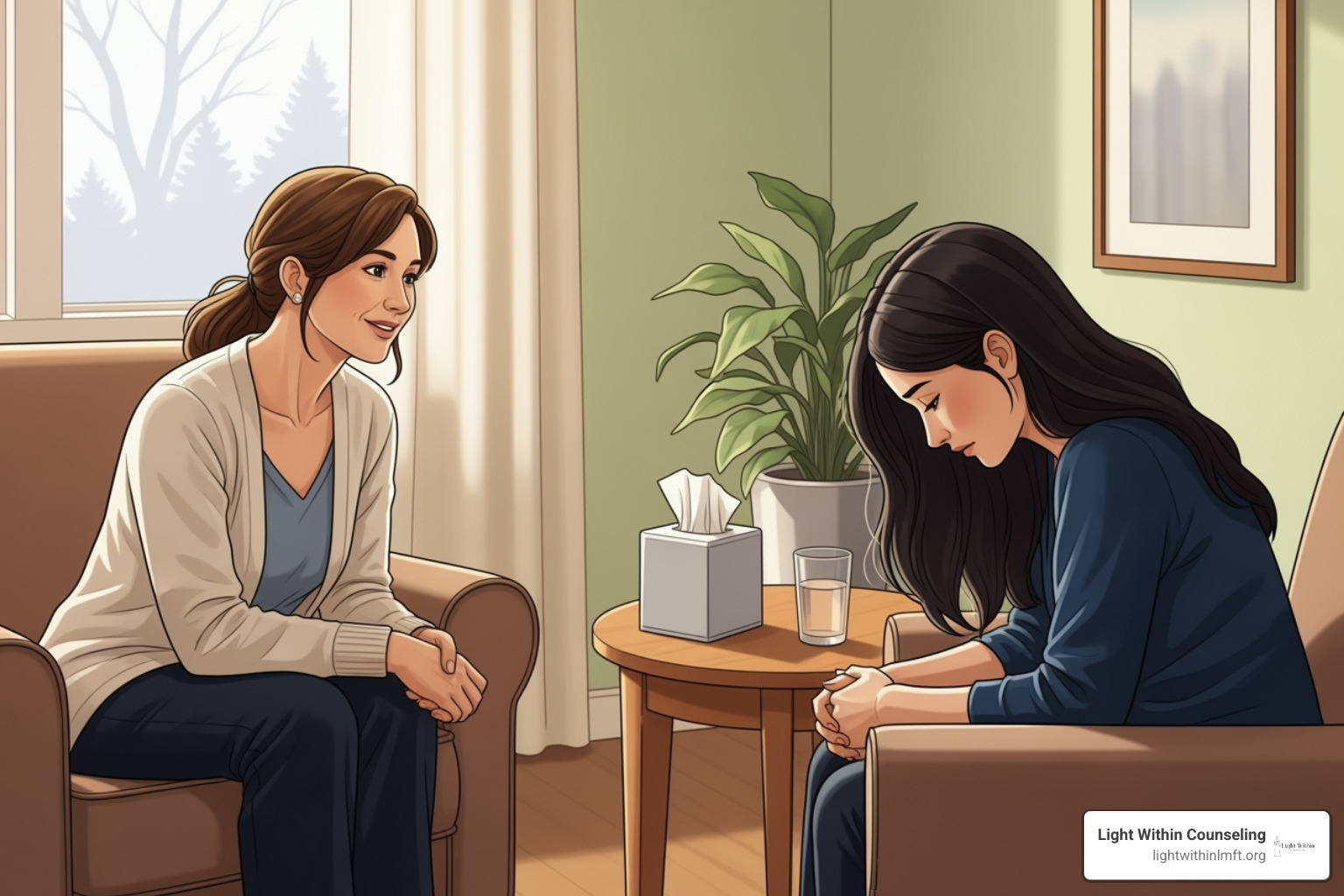
Individual grief counseling provides a private, confidential setting to explore your emotions with a trained therapist. Our role involves listening, validating your feelings, and helping you navigate the complexities of grief throughout your healing journey. This personalized approach allows us to address underlying issues such as complicated grief, anxiety, or trauma that may be complicating your healing process.
We work collaboratively with you to build practical coping strategies for managing overwhelming emotions and challenges in daily functioning. Our goal extends beyond symptom relief to helping you rediscover your inner strength, capacity for connection, and ability to find meaning after loss. Through regular therapy sessions, clients can develop the tools they need to overcome obstacles and achieve personal growth.
Family Grief Support
Grief affects entire family systems, often disrupting communication patterns and relationships. Our family sessions provide a safe space where all members can share their feelings, understand each other’s grieving processes, and learn to support one another effectively as they navigate this difficult period in their life together.
Supporting children, teens, and young adults requires specialized knowledge and approaches. For younger clients, we utilize play therapy, allowing them to communicate feelings and fears through their natural language of play. For adolescents and young adults, we tailor our therapeutic approaches to address their unique developmental needs while honoring their growing independence and identity formation.
We also provide parenting and co-parenting therapy to help you guide your children through their grief while managing your own emotional needs. This dual focus ensures that families can heal together while respecting individual differences in processing loss and building resilience as a family unit.
Support Groups and Community Connection
While individual therapy provides personalized support, support groups offer the unique benefit of community connection with others who understand your experience. Support groups create a supportive environment where people coping with similar losses can share their journey and learn from one another. These groups help reduce isolation and provide practical coping strategies from peers who are also grieving.
Our grief counselors often facilitate support groups, guiding conversations and helping members develop healthy ways to process their emotions and support each other. Support groups can be particularly valuable for specific types of loss, such as support groups for parents who have lost children, support groups for those dealing with suicide loss, or support groups for people navigating divorce and life transitions.
The sense of community found in support groups helps participants realize they’re not alone in their struggle to overcome grief. Support groups provide ongoing support beyond individual therapy sessions and can become an important part of your healing journey. Many clients find that participating in support groups helps them develop resilience and discover new ways to honor their loved one while moving forward in life.
Online Grief Counseling
We understand that attending in-person appointments can feel overwhelming when you’re grieving. Our online grief counseling services offer flexibility and convenience, allowing you to access professional therapy from the comfort and privacy of your home. This eliminates travel time and reduces barriers to consistent care, making it easier to maintain regular therapy sessions.
Online therapy is available for adults and young adults throughout California, ensuring you receive high-quality mental health services regardless of your location. Virtual sessions maintain the same therapeutic effectiveness as in-person meetings while providing additional comfort and accessibility during a difficult time in your life.

Evidence-Based Therapeutic Approaches
At Light Within Counseling, we utilize evidence-based therapeutic modalities to help individuals process grief and trauma for deep, lasting healing. Our therapists are trained in multiple approaches, allowing us to customize treatment to each person’s unique needs and help them achieve their therapeutic goals.
EMDR (Eye Movement Desensitization and Reprocessing): This approach helps your brain reprocess traumatic memories and intense emotional pain associated with loss, reducing their overwhelming impact and allowing for healthier integration of these experiences. EMDR can be particularly effective for those struggling with anxiety related to their loss.
Brainspotting: A focused treatment that identifies, processes, and releases core sources of emotional and physical pain related to grief. This method accesses deeper brain structures where trauma and emotion are stored, helping clients overcome stuck patterns and achieve healing.
Trauma-Informed Therapy: Recognizes how trauma shapes the grief experience and centers safety, choice, and collaboration. This approach uses a gentle pace to prevent re-traumatization, build nervous-system regulation and coping skills.
Play Therapy for Children: Uses a child’s natural language of play to express complex feelings about loss in a safe space. This approach honors children’s developmental needs while facilitating emotional expression and helping them develop healthy coping strategies.
Parenting and Co-Parenting Therapy: Supports parents in understanding their children’s grief responses while managing their own emotions and maintaining family stability during difficult life transitions. This therapy helps parents develop skills to support their family’s healing journey.
Substance Abuse and Addiction Therapy: For those whose grief has led to unhealthy coping mechanisms, we provide specialized addiction therapy to address both the underlying grief and the addictive behaviors, helping clients achieve lasting recovery and emotional healing.
Finding the Right Grief Therapist
Selecting a qualified grief therapist involves more than reviewing credentials—it requires finding a genuine connection that supports healing. The therapeutic relationship serves as a powerful foundation for recovery and growth throughout your healing journey.
Important factors to consider when choosing grief counselors:
- Professional Credentials: Look for licensed mental health professionals such as LMFTs, LCSWs, or LPCCs with specific training in grief and loss
- Specialization in Grief: Therapists who focus on grief work possess deeper understanding of its complexities and most effective treatment approaches
- Trauma-Informed Training: Since many losses involve trauma, expertise in trauma-informed care proves invaluable for helping clients overcome complex grief reactions
- Compassionate Approach: You deserve empathetic, non-judgmental compassionate therapists who create a safe space for your emotions
- Personal Connection: Trust your instincts about feeling understood and supported by your therapist throughout your journey
- Therapeutic Methods: Inquire about evidence-based approaches and how therapy will be customized to your specific needs and goals
Our team of compassionate therapists brings a relatable, down-to-earth approach combined with advanced training in evidence-based treatments. We understand that seeking therapy can feel intimidating, so we work to create a supportive environment where you can explore your emotions at your own pace.
Starting Your Grief Counseling Journey
Taking the first step toward grief counseling requires courage, and we’re here to make the process as comfortable as possible. You can self-schedule directly with one of our therapists through our online scheduling system, or contact us via phone, text, email, or our website contact form. Our coordinator will help match you with a therapist who aligns with your specific needs and preferences.
Before your first session, you’ll complete some paperwork online, including informed consent and background information that helps us understand your situation and past experiences that may influence your current grief. Your intake session provides a no-pressure environment to share your story, discuss your goals for therapy, and begin building a therapeutic connection. From there, you’ll schedule regular therapy sessions to begin your personalized path toward healing.
During your intake, we’ll explore what brought you to therapy, your goals for treatment, and begin identifying the root issues you’re facing. You can expect a compassionate, non-judgmental safe space where we focus on what matters most to you and help you develop the resilience needed for your healing journey.

Coping Strategies for Daily Life
Managing grief day-to-day can feel overwhelming, but practical coping strategies can support your emotional well-being and daily functioning. Grief counseling provides space to learn and practice these coping strategies, empowering you to care for yourself while navigating significant change in your life.
Self-Care Strategies: Maintaining basic self-care becomes crucial during grief. This includes eating nutritious meals, staying hydrated, getting adequate sleep, and engaging in gentle physical activity. Small, manageable goals help maintain routine and structure when life feels chaotic.
Emotional Regulation: Learning to recognize and name your emotions helps create distance from overwhelming feelings. Breathing exercises, mindfulness techniques, and grounding strategies provide tools for managing intense emotional waves and anxiety that often accompany grief.
Social Connection: While isolation feels natural during grief, maintaining some social connections supports healing. This might involve accepting help from friends, joining support groups in your community, or simply staying in touch with one trusted person who understands your journey.
Honoring Your Loved One: Finding meaningful ways to remember and honor those you’ve lost can support healing. This might include creating memory books, participating in memorial activities, or establishing new traditions that keep their memory alive while helping you achieve acceptance of your loss.
Gradual Re-engagement: Slowly returning to activities and interests at your own pace helps rebuild connection to life and meaning. There’s no timeline for this process—healing happens gradually and uniquely for each person as they develop resilience and find their way forward.
Developing effective coping strategies takes time and practice. Through therapy sessions, you’ll explore different approaches and discover what works best for your unique situation. Many clients find that combining individual therapy with support groups and community resources provides the most comprehensive support for their healing journey.
Building Resilience and Finding Hope
The journey through grief involves not just processing loss, but also building resilience for future challenges life may bring. Resilience doesn’t mean avoiding pain or pretending everything is fine—it means developing the emotional strength to overcome adversity while maintaining connections to others and meaning in life.
Our therapists help clients develop resilience by exploring their inner strengths, past experiences of overcoming difficulties, and building new coping strategies. This process often involves examining how past losses or traumas may be affecting current grief and working to achieve acceptance of both past and present pain.
Building resilience takes time and occurs gradually through the therapeutic process. As you work with your therapist, you’ll begin to develop confidence in your ability to cope with intense emotions and life’s challenges. Many clients discover strengths they didn’t know they possessed as they navigate their grief journey with professional support.
Frequently Asked Questions
How long does grief counseling take? There’s no standard timeline for grief counseling because healing happens uniquely for each person. Some individuals benefit from several focused therapy sessions to develop coping strategies, while others, particularly those experiencing complicated grief or trauma, may find longer-term support helpful. We work at your own pace, focusing on your progress and needs rather than arbitrary timelines.
Can children and teens benefit from grief counseling? Absolutely. Children, teens, and young adults process grief differently than adults and often benefit from specialized approaches like play therapy. Our associates are particularly skilled in working with children as young as 6, helping them express emotions they may not have words for and develop healthy coping strategies for their developmental stage.
What’s the difference between grief counseling and regular therapy? Grief counseling specifically focuses on issues related to loss and bereavement, while general mental health services address a broader range of concerns. Grief counselors possess specialized training in loss-related issues and understand the unique challenges of processing different types of grief throughout various life transitions.
How do I know if I need professional grief support? You don’t need to be in crisis to benefit from grief counseling. Consider professional support if grief significantly interferes with daily functioning, if you feel struggling to overcome the pain, if you’re using unhealthy coping mechanisms, or if you’re experiencing thoughts of self-harm. Seeking help demonstrates strength and commitment to your well-being.
Do you offer support groups? While our primary focus is individual and family therapy, we can connect you with appropriate support groups in the community that complement your individual therapy work. Support groups provide additional peer support and can be valuable additions to your healing journey.
Your Path Forward: Finding Peace and Hope
Grief represents one of life’s most challenging experiences, but healing remains possible. Healing doesn’t mean forgetting your loved one or “getting over” your loss—it means learning to integrate the loss into your life in a way that allows for peace, purpose, and connection again. Through this process, many people develop greater resilience and a deeper appreciation for life’s precious moments.
At Light Within Counseling, we understand that reaching out for support takes tremendous courage. Our team of relatable, compassionate therapists brings fresh perspective combined with advanced training in evidence-based treatments. We specialize in helping individuals, children, teens, young adults, and families navigate the complexities of grief, trauma, and anxiety.
We believe therapy should feel empowering rather than intimidating. Our approach emphasizes collaboration, personalization, and genuine care for your well-being as you work to overcome the challenges grief brings to your life. Through regular therapy sessions, clients can achieve acceptance of their loss while building hope for the future.
The path to healing isn’t always linear, and there will be difficult days along the journey. However, with professional support, effective coping strategies, and time, most people find they can achieve a sense of peace while honoring their loved one’s memory. Building resilience through this process often helps people navigate future life challenges with greater emotional strength.
Ready to begin your healing journey? Contact Light Within Counseling today to schedule your appointment. We offer in-person sessions in Roseville and online therapy throughout California. Our team is ready to walk alongside you as you navigate this difficult time and work toward renewed hope and healing.
You don’t have to face grief alone. Let us help you find your way forward with compassion, expertise, and personalized mental health services designed specifically for your unique needs and goals. Together, we can help you overcome the obstacles grief presents and achieve the healing and peace you deserve.