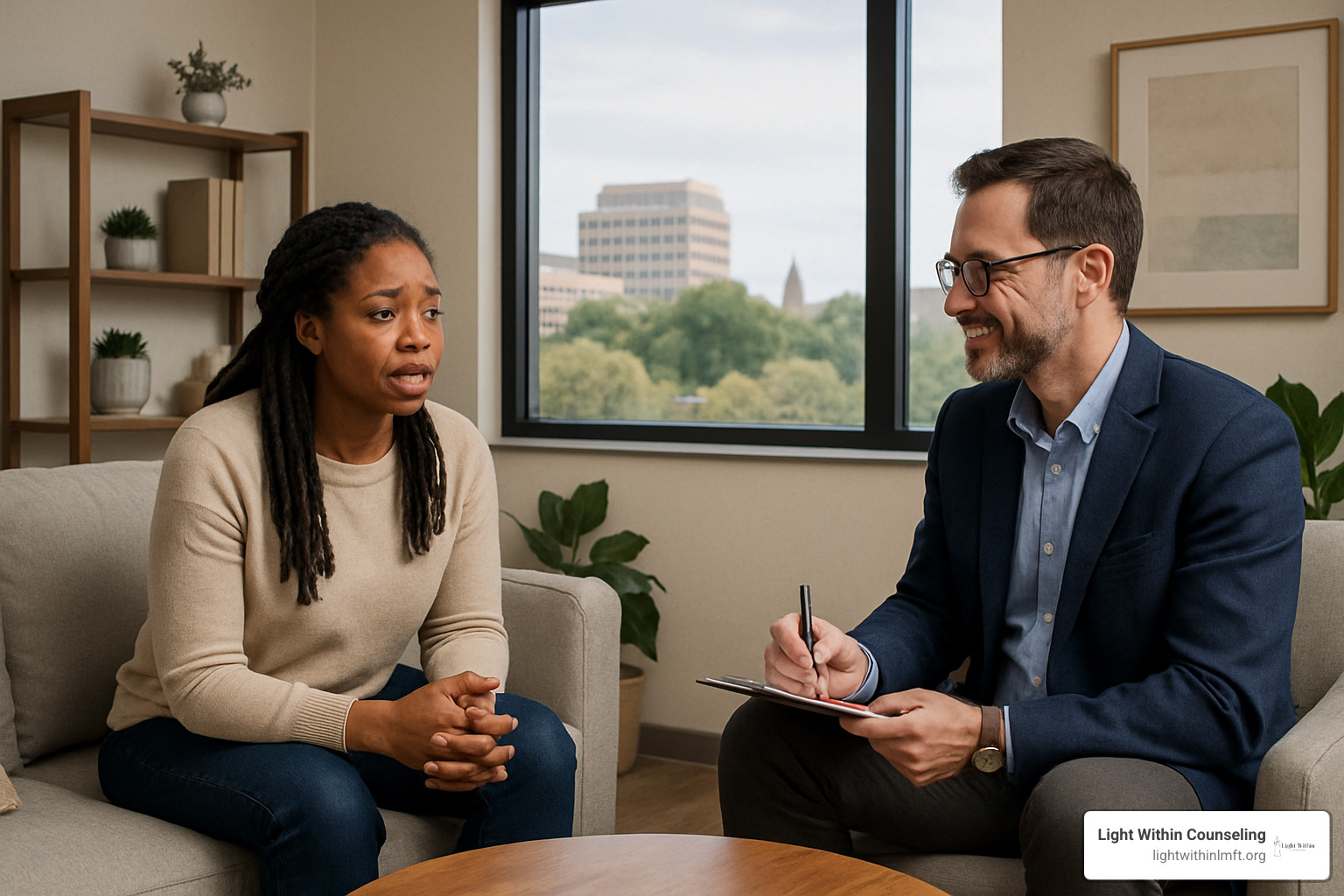
Feeling constantly on edge, like your mind won’t stop racing, or that worry has become your unwelcome companion? You’re far from alone in this experience. Anxiety affects millions of people, and when it starts interfering with your daily life, finding effective support becomes essential. The encouraging news is that relief is within reach, and online therapy for anxiety offers a practical, accessible path forward. At Light Within Counseling, we understand how overwhelming anxiety can feel, and we’re here to help you reclaim your sense of calm and control.
Key Takeaways
- Online therapy provides convenient, accessible support for anxiety that fits seamlessly into your schedule without requiring travel
- Evidence-based approaches like CBT, ERP, and Brainspotting effectively address anxiety symptoms through virtual sessions
- Our practice specializes in treating anxiety, trauma, and OCD for clients ages 6 and older throughout California
- Therapeutic techniques including mindfulness, exposure work, and cognitive restructuring form the foundation of effective anxiety treatment
- Taking the first step toward online therapy demonstrates strength and commitment to your mental well-being
Understanding Anxiety and Its Impact
What Is Anxiety Really?
Anxiety operates like an internal alarm system designed to protect you from danger. It’s your body’s natural response to perceived threats, triggering the fight-or-flight mechanism that kept our ancestors safe. In today’s world, however, this alarm can become oversensitive, responding to everyday stressors—deadlines, social interactions, health concerns—as though they were genuine emergencies. When this happens, you might find yourself in a constant state of high alert, exhausting your mental and physical resources.
At Light Within Counseling, we recognize that anxiety manifests differently for each person. What triggers intense worry for one individual might barely register for another. This personalized experience is exactly why we tailor our treatment approaches to your specific situation, ensuring that the strategies we develop together actually work for your life.
The Widespread Nature of Anxiety Disorders
Anxiety disorders represent one of the most common mental health challenges in the United States, affecting adults, teens, and children alike. These conditions go beyond occasional worry or stress. They involve persistent, excessive anxiety that significantly interferes with daily functioning. Whether you’re struggling to concentrate at work, avoiding social situations, or experiencing physical symptoms that disrupt your routine, anxiety disorders can touch every aspect of your life.
Our group practice has witnessed firsthand how anxiety doesn’t discriminate. We work with individuals aged 6 and older, from children experiencing separation anxiety to adults dealing with generalized anxiety disorder. The pervasiveness of these conditions underscores an important truth: seeking help for anxiety is not a sign of weakness but rather a courageous step toward better health.
Recognizing the Signs in Your Life
Anxiety broadcasts its presence through various channels, both mental and physical. Understanding these signals helps you recognize when professional support might be beneficial.
Physical manifestations often include a racing heartbeat, shallow breathing, muscle tension, headaches, digestive issues, or feeling constantly fatigued. You might notice your hands trembling during stressful moments or experience unexplained sweating.
Mental symptoms frequently involve racing thoughts, excessive worrying about future events, difficulty concentrating, and persistent feelings of dread. Your mind might constantly generate “what if” scenarios, pulling your attention away from the present moment.
Behavioral changes can emerge subtly. You might start avoiding certain situations, experience sleep disturbances, feel restless without knowing why, or find yourself seeking constant reassurance from others.
If these experiences are becoming your new normal and interfering with your relationships, work, or personal goals, reaching out for support can make a meaningful difference.
The Benefits of Online Therapy for Anxiety
Accessibility and Convenience from Home
One of the most significant barriers to mental health treatment is simply getting there. When you’re already feeling anxious, the thought of traveling to an appointment, sitting in a waiting room, and navigating unfamiliar spaces can feel overwhelming. Online therapy eliminates these obstacles entirely.
At Light Within Counseling, we offer both in-person sessions at our Roseville, CA office and online therapy throughout California. Our virtual platform allows you to connect with our therapists from wherever you feel most comfortable—whether that’s your living room, bedroom, or even your parked car during a lunch break. This flexibility makes it significantly easier to maintain consistent treatment, which is crucial for managing anxiety effectively.
For clients in Granite Bay, Rocklin, Lincoln, and Loomis, online sessions provide an excellent alternative when visiting our Roseville location isn’t convenient. Adults throughout California can access our specialized anxiety treatment without geographical limitations.
Finding Specialized Support That Fits
The therapists at Light Within Counseling bring advanced training in treating anxiety disorders, trauma, and OCD. We’re not generalists trying to be everything to everyone. Our team has pursued specialized education in evidence-based treatments specifically designed for anxiety, including Brainspotting, EMDR, ERP therapy, and CBT.
What sets our practice apart is our approach. We’re mostly therapists in our 30s who bring a fresh perspective combined with rigorous clinical training. We don’t believe therapy should feel stuffy or intimidating. Instead, we create a down-to-earth, relatable environment where you can be yourself while doing the hard work of healing. Our clients often tell us they appreciate our genuine warmth and the way we take time to truly understand their unique circumstances before recommending a treatment approach.
Overcoming Traditional Barriers
Several common concerns prevent people from seeking anxiety treatment. Financial considerations matter, which is why we accept out-of-network insurance benefits and encourage you to reach out to discuss pricing. Privacy concerns are valid, and our online platform uses secure, HIPAA-compliant technology to protect your information and sessions.
Perhaps the most significant barrier is simply the discomfort of asking for help. Our intake process is designed to be as smooth and supportive as possible. You can self-schedule directly with a therapist through our online system, or contact us via phone, email, or text, and our coordinator will help match you with someone who fits your needs. Before your first session, you’ll complete paperwork online at your convenience, and then your intake session becomes a collaborative conversation about your goals and experiences.
Evidence-Based Therapy Approaches for Anxiety

When you’re investing time, energy, and resources into therapy, you deserve approaches backed by solid research. At Light Within Counseling, we utilize treatment methods with proven effectiveness for anxiety disorders.
Cognitive Behavioral Therapy (CBT) for Anxiety
Cognitive Behavioral Therapy operates on a straightforward principle: your thoughts, emotions, and behaviors influence each other in powerful ways. When you’re anxious, your thoughts often spiral into worst-case scenarios, which intensifies uncomfortable feelings, which then leads to avoidance behaviors that actually reinforce the anxiety cycle.
CBT helps you identify these unhelpful thought patterns and challenge them. For example, if you think “Everyone will judge me” before a social event, we’ll examine the evidence for and against this belief, consider alternative perspectives, and develop more balanced thoughts. This isn’t about forced positive thinking—it’s about realistic thinking.
Our therapists often assign between-session practice because applying these skills in your daily life is where real change happens. You might keep a thought record, practice specific behaviors, or experiment with new responses to anxiety-provoking situations. Many clients find that once they can spot and reframe their anxious thoughts, the intensity of their worry decreases significantly.
Exposure and Response Prevention (ERP)
ERP therapy is particularly powerful for OCD and specific phobias. The treatment involves gradually and systematically facing situations, objects, or thoughts that trigger your anxiety while resisting the urge to perform your usual safety behaviors or compulsions.
This might sound challenging—because it is. But here’s what makes it effective: when you face feared situations without engaging in avoidance or rituals, your brain learns that the anticipated catastrophe doesn’t occur, or that you can tolerate the discomfort without needing to react. Over time, the anxiety response naturally diminishes.
At Light Within Counseling, our therapists are specifically trained in ERP and structure this exposure work carefully, moving at a pace that feels challenging but manageable. We create detailed hierarchies together, starting with less anxiety-provoking situations and gradually working toward more difficult ones. The online format can actually enhance this work, as you can practice exposures in your natural environment with your therapist’s support.
Brainspotting and EMDR for Trauma-Related Anxiety
Sometimes anxiety has roots in past traumatic experiences. When this is the case, traditional talk therapy might not be enough. That’s where Brainspotting and EMDR (Eye Movement Desensitization and Reprocessing) become invaluable.
These specialized approaches help your brain process distressing memories in ways that reduce their emotional intensity. Brainspotting uses specific eye positions to access and process deep brain activity related to trauma, while EMDR uses bilateral stimulation to facilitate the brain’s natural healing processes.
Both methods can be effectively delivered online. Our therapists have adapted these techniques for virtual sessions, maintaining their therapeutic power while offering the convenience and comfort of participating from home. Many clients find that addressing the traumatic roots of their anxiety leads to deeper, more lasting relief than symptom management alone.
Addressing Specific Anxiety Concerns Online
Managing Social Anxiety Through Therapy
Social anxiety transforms everyday interactions into sources of intense dread. If you find yourself avoiding social situations, worrying excessively about how others perceive you, or experiencing physical symptoms like sweating or trembling in social contexts, social anxiety may be affecting your life.
Our therapists help you address social anxiety through graduated exposure exercises, cognitive restructuring, and skills development. We might start by examining the thoughts that fuel your social fears—beliefs like “I’ll embarrass myself” or “People will think I’m stupid.” Together, we’ll test these predictions and develop more realistic perspectives.
The beauty of online therapy for social anxiety is that it provides a controlled, supportive environment to practice before venturing into more challenging situations. We can role-play conversations, work through anticipated scenarios, and build your confidence progressively.
Coping with Health Anxiety Online
Health anxiety involves persistent worry about having or developing serious medical conditions, often leading to excessive checking, doctor visits, or reassurance-seeking. The internet has made this particularly challenging, as symptom-checking websites can fuel catastrophic thinking.
At Light Within Counseling, we approach health anxiety by helping you tolerate uncertainty—arguably the most difficult but most important skill. Using ERP principles, we work on gradually reducing checking behaviors and sitting with uncomfortable physical sensations without immediately jumping to worst-case conclusions.
We also address the cognitive distortions that maintain health anxiety, such as selective attention to bodily sensations, catastrophic misinterpretation of symptoms, and the belief that worry somehow protects you. The goal isn’t to convince you that you’re fine—it’s to help you function well even when you can’t be 100% certain about your health status.
Trauma-Informed Care for Anxiety
When anxiety stems from traumatic experiences, treatment requires particular sensitivity and expertise. Trauma-informed therapy acknowledges how past trauma affects your present experience and creates safety throughout the healing process.
Our team receives ongoing training in trauma-focused approaches. We understand that trauma can make the world feel fundamentally unsafe, causing anxiety that’s logical given your experiences. Rather than just managing anxiety symptoms, we help you process the traumatic memories themselves using specialized techniques like Brainspotting and EMDR.
This work can happen effectively online. Our virtual sessions provide a secure, confidential space where you can engage in trauma processing from an environment where you feel safe and grounded. Many clients appreciate being able to do this difficult work from home, where they have immediate access to their own comfort resources after sessions.
Therapeutic Techniques for Managing Anxiety Symptoms
Mindfulness and Relaxation Techniques
Mindfulness practices help you develop a different relationship with anxious thoughts and feelings. Rather than trying to eliminate anxiety—which often backfires—mindfulness teaches you to observe it without getting caught in its current.
Deep breathing exercises provide immediate anxiety relief by activating your parasympathetic nervous system. We teach specific breathing patterns, such as the 4-7-8 technique (inhale for 4, hold for 7, exhale for 8), that signal your body to move out of fight-or-flight mode.
Progressive muscle relaxation involves systematically tensing and releasing muscle groups throughout your body. This practice increases awareness of physical tension and provides a concrete method for releasing it. Many clients incorporate this into their bedtime routine to improve sleep quality.
Mindfulness meditation doesn’t require you to empty your mind—an impossible task. Instead, it’s about paying attention to present-moment experience with openness and without judgment. Even brief daily practice can reduce overall anxiety levels and increase your capacity to handle stressful situations.
Developing Healthy Coping Mechanisms
Effective anxiety management requires a toolkit of healthy coping strategies that you can employ when difficult feelings arise.
Problem-solving skills help when anxiety relates to actual challenges in your life. We break overwhelming problems into manageable steps: identify the issue clearly, brainstorm possible solutions, evaluate each option, choose an approach, and take action. This structured method reduces the paralysis that anxiety often creates.
Assertive communication skills address the anxiety that builds when you can’t express needs or set boundaries. Learning to communicate directly, honestly, and respectfully reduces interpersonal stress and improves relationships.
Engaging in meaningful activities provides natural anxiety relief. When you’re anxious, you often withdraw from enjoyable pursuits, which actually increases anxiety over time. We help you identify and reconnect with activities that bring satisfaction and joy, counteracting anxiety’s tendency to narrow your world.
Challenging Unhelpful Thought Patterns
Anxiety produces characteristic thinking errors—cognitive distortions that amplify worry beyond what situations warrant. Common patterns include catastrophizing (assuming the worst will happen), all-or-nothing thinking (seeing things in extremes), and mental filtering (focusing only on negative aspects).
Our therapists teach you to recognize these patterns in real-time and challenge them. This doesn’t mean replacing anxious thoughts with unrealistic positive ones. Instead, you learn to ask yourself: What evidence supports this thought? What evidence contradicts it? Am I assuming I know what others are thinking? Is there another way to look at this situation?
Over time, this practice weakens anxiety’s grip. You’ll still have anxious thoughts—everyone does—but they won’t control your behavior or determine how you feel.
Online Therapy for Different Age Groups
Therapy for Children and Teens
Anxiety in younger individuals often looks different than adult anxiety. Children might refuse to attend school, complain of frequent stomachaches, or become clingy and unable to separate from parents. Teens might withdraw socially, experience academic struggles despite capabilities, or develop perfectionistic tendencies that fuel constant worry.
Our associates particularly enjoy working with children and teens, and we have extensive training in age-appropriate approaches. For children as young as 6, we utilize play therapy techniques that allow them to express and process feelings through games and creative activities. For preteens and teens, we adapt evidence-based treatments like CBT to their developmental level and concerns.
Online therapy can actually work exceptionally well for young people who have grown up with technology. The familiar screen-based format often feels less intimidating than traditional office visits, and teens especially appreciate the convenience and privacy it offers.
We also recognize that successful treatment for younger clients often involves parent participation. We provide guidance on supporting your child’s progress at home and help families develop communication patterns that reduce rather than reinforce anxiety.
Adult Anxiety Treatment Online
Adult anxiety frequently revolves around work stress, relationship challenges, parenting concerns, health worries, or the cumulative weight of multiple responsibilities. It can manifest as constant worry, panic attacks, social avoidance, or the feeling that you’re barely keeping it together.
Our therapists help adults develop practical strategies for managing overwhelming anxiety while addressing its root causes. We work on identifying specific triggers, challenging catastrophic thinking patterns, and building coping skills that fit your lifestyle and commitments.
The flexibility of online sessions makes anxiety treatment more accessible for busy adults. You can schedule therapy during lunch breaks, before the kids wake up, or after they go to bed. This convenience significantly increases treatment adherence—you’re more likely to consistently attend sessions, which is crucial for seeing real progress.
Whether you’re dealing with generalized anxiety, panic disorder, social anxiety, or anxiety related to specific life circumstances, we tailor our approach to address your particular concerns and goals.
The Role of Lifestyle in Anxiety Management
Integrating Lifestyle Modifications
While therapy provides essential tools and insights, lifestyle factors significantly influence anxiety levels. Think of lifestyle as the foundation upon which therapeutic work builds. When that foundation is unstable—poor sleep, inadequate nutrition, sedentary habits—even the best therapy techniques have less impact.
We help you identify lifestyle modifications that support your anxiety management goals. This isn’t about perfection or overhauling your entire life overnight. It’s about making small, sustainable changes that collectively create a more anxiety-resistant lifestyle.
The Importance of Sleep and Nutrition
Sleep deprivation and anxiety create a vicious cycle. Anxiety disrupts sleep, and poor sleep intensifies anxiety. We work with you to develop better sleep hygiene: establishing consistent sleep and wake times, creating a relaxing bedtime routine, limiting screen time before bed, and addressing racing thoughts that interfere with rest.
Nutrition also plays a crucial role. Skipping meals, consuming excessive caffeine, relying on processed foods, or eating erratically can all exacerbate anxiety symptoms. We’re not nutritionists, but we can help you recognize how your eating patterns affect your mood and energy, and support you in making gradual improvements.
The Power of Regular Movement
Exercise is one of the most effective natural anxiety treatments available. Physical activity releases endorphins, reduces stress hormones, improves sleep quality, and provides a healthy outlet for excess energy and tension.
The key is finding movement you actually enjoy, whether that’s walking, yoga, dancing, swimming, or strength training. Consistency matters more than intensity. Even 20-30 minutes of moderate activity most days can significantly reduce anxiety symptoms.
We encourage you to view exercise not as another obligation adding to your stress, but as a gift you give yourself—time dedicated to your physical and mental well-being.
When to Seek Professional Help for Anxiety
Identifying Disruptions in Daily Life
The line between normal stress and clinical anxiety often relates to functionality. Ask yourself: Is anxiety interfering with my ability to work, maintain relationships, or enjoy activities I used to love? Are you avoiding situations that are important to you because of anxious feelings? Has worry become so constant that it’s hard to concentrate on anything else?
If anxiety is creating significant disruptions in your daily life, professional support can help you regain your footing. You don’t have to wait until things become unbearable to reach out for help.
Recognizing Physical and Emotional Symptoms
Pay attention to persistent physical symptoms: chronic muscle tension, frequent headaches, digestive issues, difficulty breathing, heart palpitations, or constant fatigue. These are your body’s ways of signaling distress.
Emotional symptoms matter too. If you’re feeling overwhelmed more often than not, experiencing irritability that’s affecting your relationships, or finding that joy feels increasingly out of reach, these signals warrant attention.
The Value of Early Intervention
Addressing anxiety early prevents it from becoming deeply entrenched. The longer unhelpful patterns continue, the more automatic they become. Early intervention means learning effective coping strategies before anxiety significantly impacts your life trajectory.
Think of seeking help as preventive care for your mental health. You’re not waiting for a crisis—you’re proactively addressing challenges before they escalate.
At Light Within Counseling, we specialize in helping individuals, teens, and children who are experiencing anxiety that’s affecting their daily lives and overall success. Our team’s advanced training and evidence-based approaches make us particularly effective at treating anxiety disorders.
Building Resilience and Finding Lasting Peace
Personalized Treatment Plans for Your Unique Experience
We don’t believe in one-size-fits-all therapy. Your anxiety is unique to you—shaped by your experiences, biology, personality, and current life circumstances. That’s why we create personalized treatment plans that address your specific concerns and goals.
During your intake session, we’ll explore what brings you to therapy, what you’ve tried before, what your life looks like now, and what you hope to achieve. From there, we develop a collaborative plan that draws on the therapeutic approaches most likely to help your particular situation.
This plan isn’t static. As you progress, we’ll regularly check in on what’s working, what needs adjustment, and whether your goals have evolved. Flexibility and responsiveness are essential to effective treatment.
Fostering Self-Awareness and Growth
Therapy provides a unique opportunity for self-discovery. As you work through anxiety, you’ll develop deeper understanding of your patterns, triggers, values, and strengths. This self-awareness is transformative—it enables you to make conscious choices rather than being driven by automatic reactions.
Growth happens when you combine insight with action. We don’t just help you understand why you feel anxious; we support you in developing new ways of responding that align with the person you want to be.
Achieving a Calmer, More Balanced Life
The goal of anxiety treatment isn’t to eliminate all worry—that’s neither possible nor desirable. A certain amount of anxiety serves useful purposes. Instead, the goal is to reduce anxiety to manageable levels so it no longer controls your life.
You’ll develop confidence in your ability to handle difficult emotions and challenging situations. You’ll reclaim activities and relationships that anxiety had diminished. You’ll sleep better, feel more present, and experience greater enjoyment in daily life.
This doesn’t happen overnight, but with consistent work and the right support, lasting change is absolutely possible. Our clients regularly tell us that therapy helped them rediscover parts of themselves they thought were lost to anxiety.
Taking the Next Step Toward Relief
If anxiety has been running your life, you don’t have to continue struggling alone. Light Within Counseling offers specialized anxiety treatment for individuals ages 6 and older, delivered by compassionate therapists with advanced training in evidence-based approaches.
Whether you’re dealing with generalized anxiety, social anxiety, OCD, panic attacks, or anxiety related to trauma, our team has the expertise to help. We offer both in-person sessions at our Roseville, CA office and online therapy throughout California, making quality care accessible wherever you are.
Getting started is straightforward. You can self-schedule directly with a therapist through our online system, or contact our office by phone, email, or text. Our coordinator will help match you with a therapist who fits your needs. Before your first session, you’ll complete some brief paperwork online, and then you’re ready to begin.
Your intake session provides space to share your story, explore your concerns, and begin identifying goals. From there, we’ll work together to develop a personalized treatment plan using approaches specifically designed to address anxiety.
Don’t let anxiety continue limiting your life. Reach out to Light Within Counseling today to take that crucial first step toward feeling more like yourself again.
Frequently Asked Questions
What exactly is anxiety?
Anxiety is your body’s natural alarm system designed to alert you to potential dangers. However, sometimes this system becomes overactive, triggering intense worry, fear, and physical symptoms even when there’s no real threat. It becomes problematic when these feelings are persistent, excessive, and interfere with your daily functioning.
How effective is online therapy for anxiety?
Research consistently shows that online therapy is as effective as in-person treatment for anxiety disorders. The key factors in successful therapy—the therapeutic relationship, evidence-based techniques, and consistent engagement—are all present in virtual sessions. Many clients actually prefer online therapy because the convenience helps them maintain consistent attendance.
What therapy approaches does Light Within Counseling use?
Our therapists utilize several evidence-based approaches depending on your specific needs: Cognitive Behavioral Therapy (CBT), Exposure and Response Prevention (ERP), Brainspotting, and EMDR. We also incorporate mindfulness techniques, relaxation training, and cognitive restructuring. The approach we take together depends on your particular concerns and what’s most likely to help you.
Do you work with children and teens?
Absolutely. Our associates particularly enjoy working with younger clients, and we accept individuals as young as 6. We use age-appropriate approaches including play therapy for children and adapted evidence-based treatments for teens. We also involve parents and families as appropriate to support progress.
How do I know if my anxiety is serious enough for therapy?
If anxiety is interfering with your daily life—affecting work, school, relationships, sleep, or your ability to enjoy activities—then therapy can help. You don’t need to wait until things become unbearable. Early intervention often leads to faster progress and prevents anxiety from becoming more deeply established.
What can I expect in my first session?
Your intake session is conversational and collaborative. We’ll explore what brings you to therapy, what you’re experiencing, and what you hope to achieve. This session helps us understand your unique situation so we can develop a personalized treatment approach. It’s a safe, non-judgmental space where you can share as much or as little as feels comfortable.
How long does anxiety therapy typically take?
This varies significantly based on individual circumstances. Some people experience meaningful improvement within a few months, while others benefit from longer-term support. We’ll regularly assess your progress together and adjust the treatment plan as needed. Our goal is to equip you with tools and insights that serve you long after therapy ends.
Do you accept insurance?
We accept out-of-network insurance benefits. This means you pay for services and then submit claims to your insurance company for reimbursement based on your out-of-network coverage. We encourage you to contact our office to discuss pricing and how to maximize your insurance benefits.